
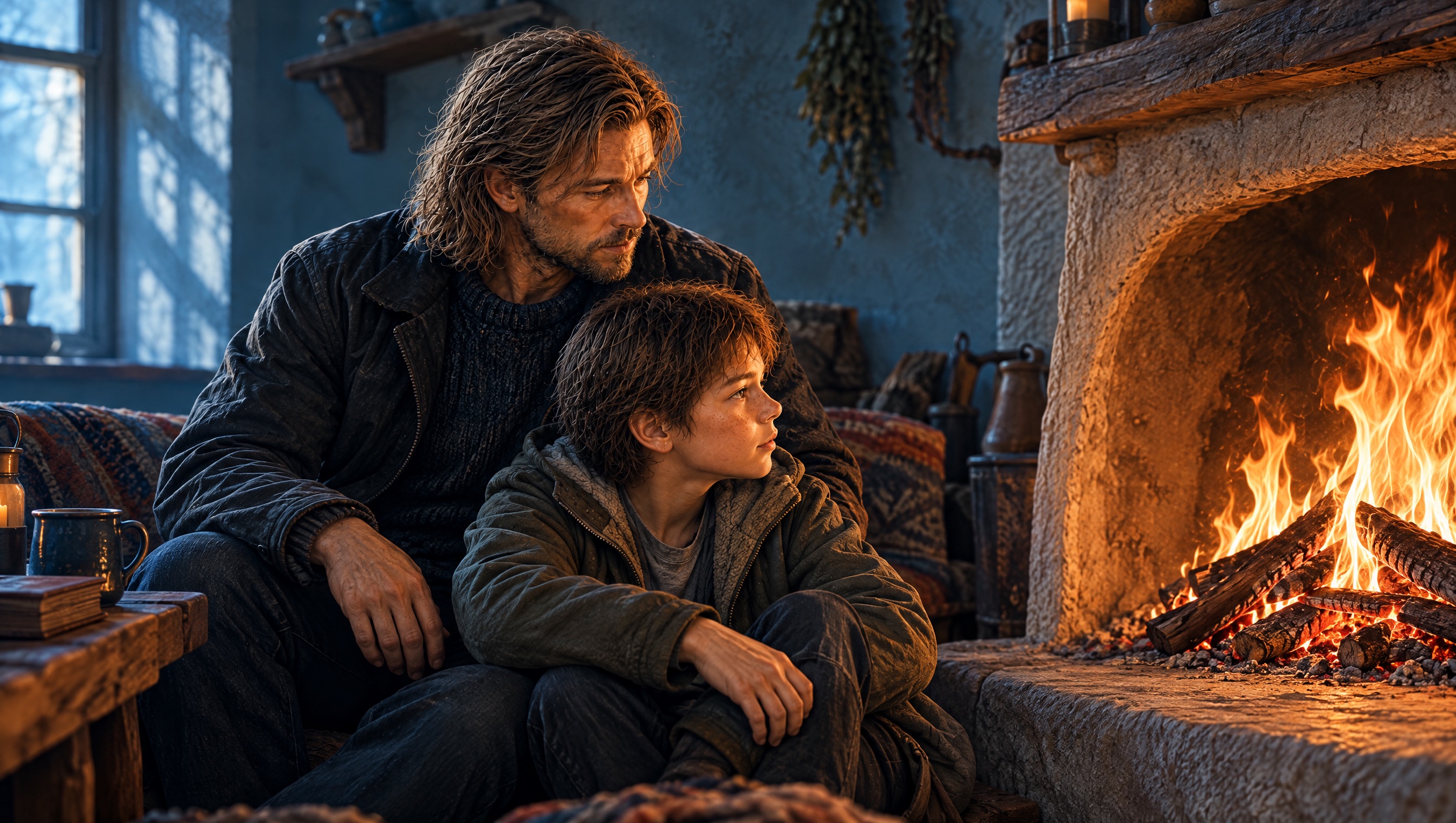
Before the household went to sleep, there was one more thing to settle for the night: the fire. In Lithuanian tradition, covering the coals with ash could be accompanied by words addressed to Gabija, the goddess associated with the hearth. [1] [2]
A bed of ashes
The Lithuanian encyclopaedia describes covering the fire with ash as putting it to sleep. Blowing on the embers to revive it was waking it. Beneath the ash, heat could survive until morning. The words gave that practical task the intimacy of putting someone to bed. [1]
In a formula discussed by folklorist Marija Zavjalova, the fire is asked to sleep and to stay in its place. The idea of a fire wandering through the house gives the words their force. The same hearth that warmed people and cooked their food could threaten the home if its flames spread. [2]
What the words remember
The Lithuanian Ethnographic Museum discusses prayers recorded in the nineteenth and early twentieth centuries alongside devotion to Saint Agatha, who was associated with protection against fire. Those records show how beliefs about the hearth could coexist with Christian traditions. The dates tell us when the prayers were written down; the custom’s beginnings are harder to date. [3]
The film imagines one evening and morning in a rural household. Its central gesture comes from the documented custom: before the people rested, they tended the fire that would warm them again in the morning. [1]
THE STORY IN MOTION
Watch the story
See the scene brought to life in The Baltic Code’s short film.
Press play to load the YouTube player. Watch on YouTube ↗
Sources & historical notes 3 references
- Visuotinė lietuvių enciklopedija, Gabija ↗
Identifies Gabija and describes putting the hearth fire to sleep and waking it again.
Back to the story ↑ - Marija Zavjalova, Lithuanian Spells ↗
Discusses recorded folklore formulas addressed to the fire.
Back to the story ↑ - Lithuanian Ethnographic Museum, Šv. Agota – ugnies globėja ↗
Discusses fire prayers and the overlap between folk beliefs and devotion to Saint Agatha.
Back to the story ↑
About the reconstruction
The family, room and gestures in the film are illustrative reconstructions. The modern dialogue is fictional.